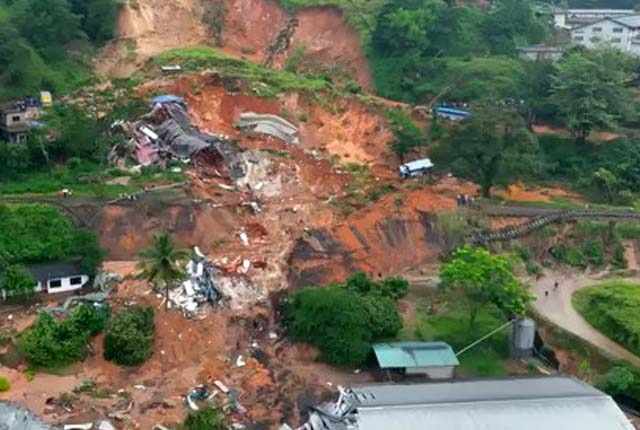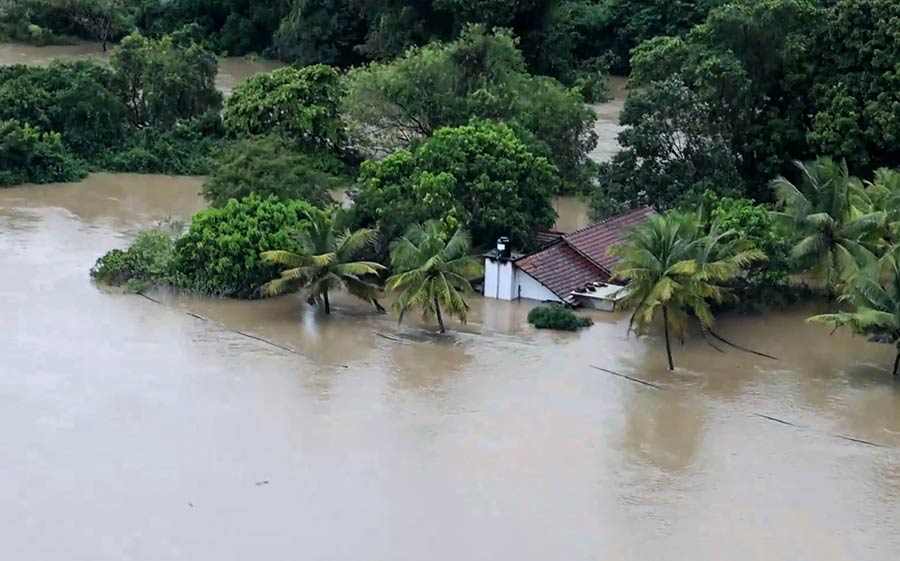
A powerful cyclonic storm, Cyclone Ditwah, has unleashed unprecedented destruction across large parts of Sri Lanka. According to the latest preliminary assessments by local authorities, the death toll has now risen beyond 600, while more than 350 people remain missing, as thousands of families continue to struggle for survival amid floods and landslides.
Several districts including Colombo, Kandy, Nuwara Eliya, Badulla, Ratnapura, Trincomalee, Vavuniya, Mullaitivu, Kegalle, and Anuradhapura have been severely affected. Continuous torrential rain has submerged main roads, damaged bridges, and severely disrupted electricity and telecommunication services. The Sri Lankan armed forces, police, and volunteer youth teams are engaged in round-the-clock rescue and relief operations using boats and helicopters to reach stranded communities.
Facing the escalating crisis, President Anura Kumara Dissanayake has declared a State of Public Emergency in Sri Lanka, effective November 28, 2025, to enhance disaster response, accelerate relief efforts, and protect public safety nationwide.
In response to Sri Lanka’s urgent humanitarian appeal, the Government of India has launched a major relief mission titled Operation Sagar Bandhu. Under this operation, more than 53 metric tonnes of essential relief materials – including dry rations, medicines, tents, tarpaulins, hygiene kits, and emergency equipment – have been sent to Sri Lanka through air and sea routes.
The Indian Air Force has deployed transport aircraft to airlift emergency supplies along with trained disaster response personnel to assist local rescue teams. At the same time, the Indian Navy has dispatched naval vessels to Sri Lankan waters to support evacuation efforts, coastal rescue operations, and aid distribution.
Tragic incidents continue to be reported daily, including families buried under massive landslides, vehicles swept away by raging floodwaters, and residents stranded as bridges collapsed under powerful currents. The cyclone has also caused extensive losses to livestock and agriculture, further deepening the national humanitarian crisis.
Authorities continue to urge the public to remain highly vigilant, strictly follow all safety instructions, and cooperate with emergency responders, as large-scale rescue, relief, and rehabilitation efforts — supported by both national and international assistance — continue across the cyclone-hit regions.